4/08/2012

Outdoor Week Ending 4/8/12

Week     Planned          Actual        Long   Long      Hiking       Time
Ends  Hours  Long  Hours  Climb  Time  Climb Time  Climb On Feet
 4/8    5:31    1:27    4:33    1740    1:42      800    8:25  3040   12:58

The week started out good, and I felt like running faster early in the week. But the extra speed, on top of a few weeks of increased time on my feet caught up with me, and Friday's run left my right calf sore. I was scheduled for one more run this week, but chose not to run and just do light hiking on the weekend.

This is the third week in my three week long run training cycle, and the most important thing is to be rested for next week's long run of over 3.5 hours, so recovery (and hopefully getting stronger) was the main goal this week. How I feel next week will tell if I rested enough this week.

2-Apr    run    0:53    400    7    ram park, fartlek, forays over level 10
2-Apr    hike    0:27    260    3    ram park

A run-hike with some speed.

3-Apr    run    1:42    800    5    harriman
3-Apr    hike    0:29    260    5    harriman

A run-hike at a harder than normal effort.


4-Apr    hike    1:48    700    3.5    mohonk
4-Apr    run    0:27    40    1    ram park

Separate hike and run later, but should have skipped the run, as my legs never warmed up for the run and I felt stiff.

5-Apr    run    0:43    400    3    140    harriman
5-Apr    hike    1:10    460    2    117    harriman

Yet another run-hike, feeling unusually weary, I think lack of sleep. California weather in New York! I thought as I drove home today, listening to Katy Perry's California Girls on the radio. Captured the mood of the springtime, at least this time. Don't even know if she's from California, and I don't think she even has a great voice, but she's pretty hot. But I'm loving this California-like sunshine and dryness. So many springtimes on the east coast are one soaking week after the next.

6-Apr    hike    1:07    560    2    ram park
6-Apr    run    0:48    100    2    ram park

After this run-hike my right calf got sore and ended my running for the week.

7-Apr    hike    0:34    40    2    ram park
8-Apr    hike    2:50    760    1    91    harriman

Legs ok now I think, but we'll see when I run Monday.

The extra hiking time I've been doing lately probably caught up with me a little this week, but I'm going to keep doing it. The chart tells the story:

Some Photos from the week:

Up to Monitor Rock, north of Wanoksink lake near the blue 'seven hills' trail in Harriman:


An old Kiln nearby Monitor rock:


On the black trail east of Pine Meadow Lake:


Lots of giant boulders under the man-made lake:


4/07/2012

re: Run-Hikes

From rec.running:
On 4/6/2012 8:03 PM, pithydoug wrote:
On Apr 6, 10:02 am, Tony S<n...@none.none>  wrote:
Until recently I always kept my hiking distinct from my running, and I
still keep track of it separately, but I now go out and do what I call
run-hikes all the time. Basically if I hike part of the time and run
part of the time I can be out there longer and combine the best of both
experiences. It's taken a month or so to really get used to this
concept, but I'm doing this almost every day now and loving it.

This is in effect what we/you do in races like the Escarpment Trail so
I would expect this training regimen spot on. See how this year's race
compares to the last few years, You might be pleasantly surprised.  I
incorporate  run/hike into the last two Woodstock(hill) runs this
winter(and every winter) to simulate race conditions.  If you think
about it, you can get some really long "runs," time on you feet,
better trained and minimize injuries.

-Doug

I do think a lot of hiking can make me stronger, as you say more time on the feet, and it's true that on those three main mountains of the Escarpment trail, I end up hiking parts of Windham, most of Blackhead and more than I want to of Stoppel. But during the race I'm working much harder even when hiking uphill than I normally work on an average trail run.

The distinction in my recent activity is that I flip a switch and go deliberately slow, casually, when in hiking mode. When in running mode I might still be hiking up a steep hill, but I'm going hard at it instead of taking my time. I think the lower impact and easier pace works to my advantage psychologically, and still gives me some good base aerobic work. The hiking may not be as specific, but probably 80% of the same muscles are used. I like being able to choose which parts of a longer route to run, and which to hike and enjoy being out there in a different way.

The last hike-run I measured was Thursday, with 43 minutes of running at HR 140, and 1:10 of hiking at HR 117. On some hikes it's easy to get the average HR well into the 120s. If I think about it from a work-being-done point of view, that 1:10 at 117 is 47 beats more than a sedentary-activity HR of 70, or 3290 more heart beats, with the run yielding 3010 extra beats. For comparative purposes at HR 65 the whole day has 93,600, or 3900 per hour.

4/05/2012

Run-Hikes

I always hiked, sometimes more than occasionally, and though I wasn't always actively running, over the last 35 years I've been a runner for the vast majority of those years. As it happens I began trail running very early, mostly running down local hiking trails at first (often after partying at the top of the mountain), and then much more as training for orienteering.

I've always used hiking trails for both running and hiking, but, like most, when I set out for a given outing I knew very well what it was going to be, a hike or a run, and there was different planning involved and different friends involved. The experience was also that of either a slow-moving hike marching down the trail, or a generally shorter run with less lingering, seeing, and less gear.

Runners run, hikers hike, and walkers walk; so goes the modern thinking. We categorize each activity distinctly, and very often we tend to like to identify ourselves proudly as such, particularly for runners I think. Hikers and Backpackers also specialize and love their sport and identity to some degree, but probably more for the enjoyment of the outdoors than ego-identification. Walkers walk for exercise, but because walking is so common and is not challenging, walkers probably don't ego-identify as much as runners or even hikers do.

Hiking is different from walking in that it involves walking in a natural environment on trails, and is often more challenging than walking, and can border on climbing when in the mountains. Climbing implies technical skills whereas hiking does not, but hiking mountains can be very strenuous, can be an all-day activity, and of course can even be multi-day with even more gear: backpacking. Hiking is compelling for the direct challenge of the terrain, the beautiful natural environments hiking trails travel through, and very often by the view spots or the scenic nature of the hike.

Some hikers go for speed sometimes, but most are content to take their time and enjoy their time in the natural environment. So for most hikers, if they ego-identify, it's more about the challenging the terrain and being a member of a community that sees the outdoors up close and enjoys it's wonders. Because hikers work against both the environment and the weather for longer periods of time, they eventually learn to respect the land and it's resources, by and large.

As for runners, they range from the super competitive to the occasional jogger. Of course there are many kinds of runners, from sprinters to marathoners to trail runners to mountain runners to ultra runners. Most who consider themselves runners probably fall into the long distance road running category. But I'm talking about trail running here, and when a runner switches to trail running, it probably changes them. It's tough to generalize anything, but trail runners tend to be love the natural environment they're running in, and so probably enjoy their overall experience more, at least that's my opinion. I would like to think that trail running and hiking have influenced me positively and have made me more down-to-earth.

I have friends that I run with, and friends that I hike with. Most runners I know only like to run, and the hikers I've gone with usually only like to hike. I do have friends that will run some when hiking, but only for relatively short sections. I think the main difference is that for hiking you often need more time, because hiking is best when you're not time-pressed. For me some trail runs are like that, where I will plan a whole afternoon for a long trail run. But for most people, daily runs are squeezed into our schedule, and we just go out and do the workout. That applies to most shorter trail runs also.

In the past I always kept my running distinctly separate from my hiking, even when I was often running the very same trails I would go hiking on with friends. I would combine bike rides with either trail runs (most often), or somethings hikes, and that's great cross-training: bike to the trail head. My attitude when trail running was to move at a certain effort level over the whole route, which often means hiking up some hills. My approach to hikes is to go hard, go easy -- go as I feel or as the group feels, and stop to take pictures, sit for a while and have lunch at a scenic spot, and sometimes explore ruins or side trails.

The Run-Hike

I have occasionally done run-hikes before, but recently I've been doing them on the majority of my outings, and it's really been like a whole new better sport, with the best of both. Though I will probably still run 50ks and maybe someday will run another 50 miler, I'm not the ultra-marathon runner that can run forever, so most of my weekly runs are of moderate duration. But when I combine runs with hiking, I can get out there for longer and have a whole different interesting experience. Of course this works best if you're alone or with someone who is willing to agree on when to run and when to hike. A run-hike in general is any outing where you both run and hike. A hike-run is the same thing with more hiking than running I suppose, but the order of the words doesn't really matter.

I'm talking about going out and switching back and forth between fairly casual hiking and trail running. It can be planned, random, or according to the terrain. It's a distinction I make while out there to highlight what I'm doing. For trail runs, you move faster and carry less gear; for hikes, you carry enough to be comfortable, you move casually, and you enjoy the scenery and explore more. For some very relaxed people who happen to be both trail runner and hiker, it may be a distinction without a difference, but for most the two activities are different.

To me the distinction is that my running is tied to a path of improvement and training, so I like to plan my running and keep track of my efforts. Most hiking for me is casual cross-training, and is a really enjoyable mentally-relaxing activity, and you can use that time to think, take pictures, or explore an area. For many reasons that I won't go into here, I keep track of my running by time instead of distance. For run-hikes I just to keep track of both how much time I run and how much time I hike. I started doing run-hikes deliberately about a month ago and love it. Now I can do longer routes, be out there longer and do more. When I'm going on a run-hike I take mostly the same gear I would take on a run of the same overall duration, and a little extra food and an extra layer maybe. It's been a freeing twist on my outdoor experiences and I plan to do many more.

As an example, today I wanted a moderate outing with less running to rest my legs a little, so I did a run-hike (hike-run) where I hiked overall for 70 minutes and ran for 43 minutes. I started out hiking up the valley for 20 minutes at an easy warm-up pace for a heart rate (HR) average of 113, then switched to a run for an uphill section on a technical trail for 27 minutes (HR 142), had lunch at a scenic spot, then hiked for 35 minutes (HR 119), ran 14 minutes more (HR 137), hiked 15 minutes more (HR 112), finishing up running the rocks just a couple of minutes. I don't normally switch back and forth so much, but it was mainly two segments of running and the rest hiking. I've been mixing it up all different ways, according to how I feel, and it's been a freeing experience overall.

A couple of weeks ago I was out on a run-hike where I did some exploring of an old homestead, and a word kept popping into my mind, ranging. That's what my outing was like that day, and I wanted to do more of it. Ranging is to roam at large or freely, to move over an area so as to explore it; that's what I want my outdoor experiences to be like. I'm heading more in that direction, but I'm still planning my routes. Ranging as an outdoor activity is really a  whole different approach, and it implies going beyond the normal boundaries, doing the unexpected, and going off the trails sometimes.

Run-hikes are natural in human history. If you think about it, it would be natural for humans to run to an area, gather or hunt, which can be like hiking, then run home later in the day. The place they're interested in doing something is farther away than usual so it would be natural to run there, and run back later. When you need to get back home later in the day, you hustle or run, but when you're not in such a hurry, or when you're scouting a new area, you hike. Some combination of running and hiking was probably also used when traveling to a rival group's camp on a raid, or for that matter when going longer distances to trade, especially in earlier times.

If you're already a trail runner and you have some extra time, or if you're like me, you can't run forever but want to be out there longer -- do a longer route and deliberately hike one or more sections of it. I never thought combining the two activities could work so well, but now I love it and highly recommend it.

Transcending Training

Eventually I want to transcend the concept of training and just go out there and do stuff without keeping track of anything. Earlier this year, I had posted my training plan for the year to my blog and to rec.running, also inviting other posters there to share their training plan. One guy was disdainful of the whole idea of training, and I said something like 'excuse me'. But in the last few months I got to thinking about it more, maybe sparked by that guy's comment, but mainly because the whole idea of training seems so regimented and can feel like work. While I'm trying to improve my running and keep track of it, in the sense of training, eventually I want my running to be as fun and free as possible. I train for at least one big race a year because it does get me out there more, at least that's what served as motivation in the past. My goal now is to enjoy the experience of trail running and hiking in a way that transcends the feeling of training and going out to train.

4/03/2012

The Need for Speed

Monday at Ramapo Reservation, first day of the week, getting out at lunchtime on a blustery spring day, I once again began by hiking casually, but when I got to the hill on the green trail, I felt strong and opened it up on the hill, power hiking the very steep stuff and running pretty well up the other hills. I always expect to start having runs like this where I want to go fast when my training starts to bear fruit. Wearing the lighter Saucony Peregrines was good on this day.

I hadn't taken the green trail as much because it adds quite a bit of climb to what is already a run going up the mountain. The green trail climbs up most of the hill then drops right back down to the stream valley, only to climb up a longer hill. Anyway, I realized I could make another local trail loop combination by just climbing the gas-line cut up the hill from the green trail to the white trail. Perfect! That takes out the extra climb and adds a little distance, instead of doing the whole green trail, which adds a lot more distance.

All this means nothing to you, but it says something about me: I seek out the single-track trails and completely ignore dirt roads, power line and gas line cuts. I've come to realize though that I can make many more local trail loops by utilizing short sections of those to connect up other trails. Duh! It's just a little funny to me how I get set in my ways. Thus utilizing bear swamp road as a mid-trail connector recently made a nice little 1:20 loop out of a 2 hour longer loop. Ain't that a great name for a road by the way?

This run felt good, and I poured out the power over long parts of the run. I guess you would call it a fartlek, which means speed-play, and generally, a medium-longish run that you run long sections of very hard. I give the run a 7 out of 10 for effort, meaning that I ran overall 70% as hard as I could all-out for a race of the same duration. But at times today I was significantly above 100%, or running at a harder effort level than I could sustain during a race of that same duration. Basically I rate each run from 1 to 10, 1 being the easiest jog possible for the duration and terrain, and 10 being a full race effort for the same time duration of the run being rate, race effort being what you could actually sustain at that point in your training season, not what it might be when months away you're in peak form. Runs like these where you feel good going very hard are satisfying.

4/02/2012

Outdoor Week Ending 4/1/12

This was my second tough week in a row. Three weeks ago I had that high volume week, which felt fine, but the extra time on my feet that week -- 15 hours total -- was more than I'm used to at this point. The week after that included my long run, which took almost 4 hours, but I got through that week ok, if a little weary. This week my legs were better, but I felt like I was playing catchup since I took Monday off. I didn't feel too overloaded, and I don't have a long run planned this week. I will try to do more hiking though, since the weather is great, for now.

Week     Planned          Actual           Long   Long      Hiking       Time
Ends  Hours  Long  Hours  Climb    Time  Climb  Time  Climb On Feet
 4/1    5:55     2:15    6:26    3400      2:37    1700    4:50   2560   11:16

26-Mar   off
27-Mar    run    1:49    1700    3.5    stony brook
27-Mar    hike   1:10    700    2.5    stony brook

I was still a little tired from last week, so it was easy to take Monday off. After a few days with no running and just one very short hike, it can be hard to get the body going, and there are usually kinks that first run back because when the body has more time it does deeper healing than it can when under a more constant load of stress. For days starting up again or on recovery days, I love to start out the activity just hiking for a while and ease into running later. So it was starting again this week.

28-Mar    run    0:43    200    3    ram park
28-Mar    hike    0:34    400    3.5    ram park

Yet another run-hike; this is the perfect outing for me right now.

29-Mar    run    0:27    100    2    ram park
29-Mar    hike    0:25    400    2    ram park

A very easy kind of recovery day run-hike.

30-Mar    run    2:37    1400    4    145    stony brook
30-Mar    hike    0:47    400    4    127    stony brook

I didn't really need to run quite as long, but I felt pretty good so did slightly more than scheduled.

31-Mar    run    0:27        1    118    gym trd
1-Apr    hike    1:54    960    3.7    harriman
1-Apr    run    0:23        3    harriman

This was really easy day, casual hike mostly, with some fun technical running on the white trail going back down the valley. I met a group of Korean ladies at Pine Meadow Lake. I've admired different Asian cultures, and I have to give Koreans a lot of credit for being enthusiastic hikers. I've often seen big groups pretty far out there on the trails where I normally don't see anyone.

Where the white Kakiat trail crosses the red Pine Meadow trail and then runs down along a steep section where Pine Meadow Brook drops through a large glacial boulder field, running the trail is so technical it's like doing some kind of agility drill. It's also so much fun that I have to run it at least twice a week if possible. After that I did a power sprint up -- about 100 meters 45% grade about 35 seconds -- from the lower yellow trail back up to the red trail, just to mix things up and because I enjoy that last part of the red trail more.

Here are some photos from the week:

Looking back the Ramapo Torne ridge from the blue trail.


Out on the Kakiat white trail, heading east.


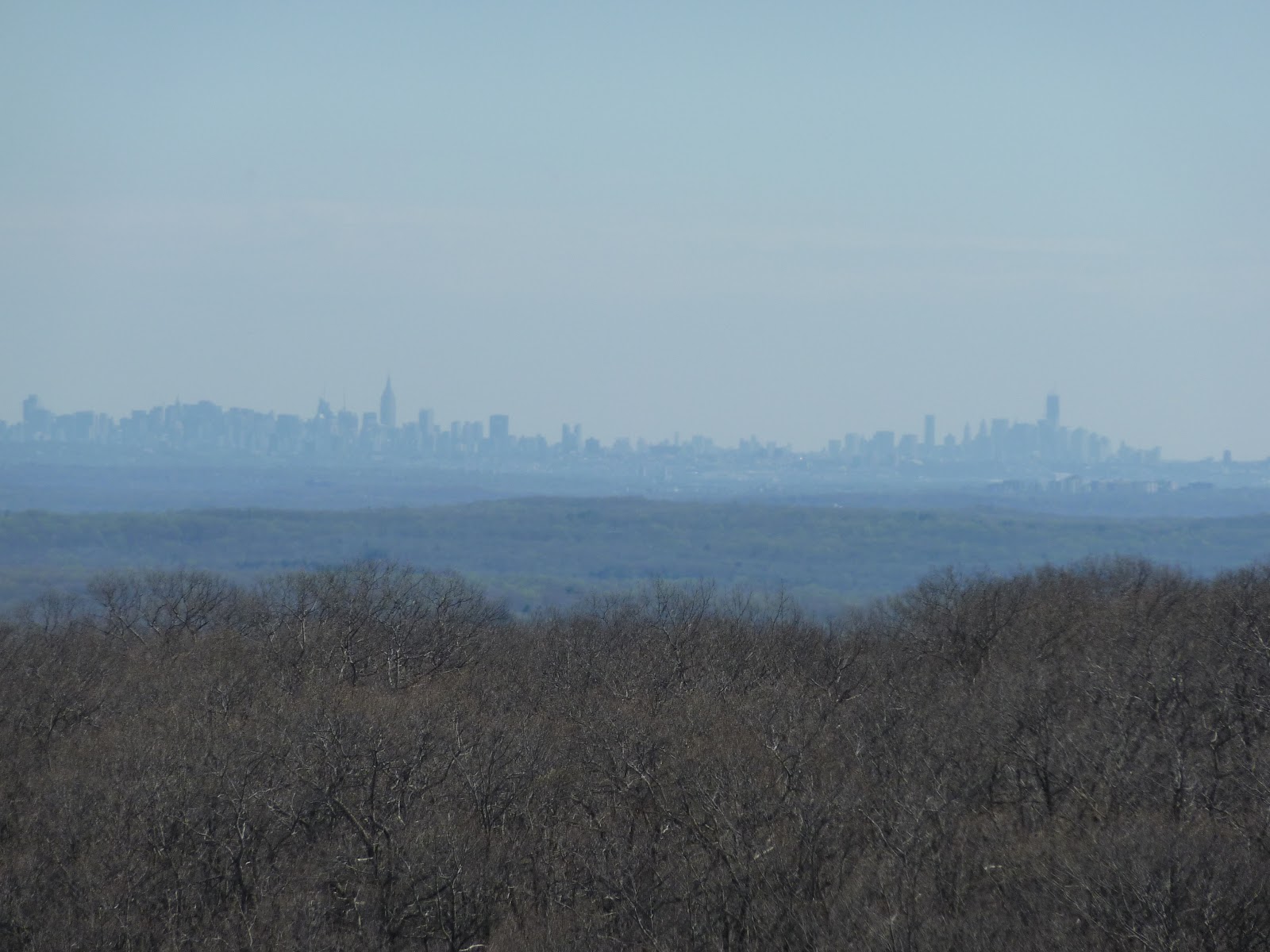
Lunch break on the Suffern-Bear Mountain trail, looking southeast, NYC ~30 miles as the crow flies, the view spot:


The tip of the peninsula at Pine Meadow Lake:


3/31/2012

Running Shoe Lineup

My main feeling about running shoes and all types of outdoor shoes is that they've never been better, and innovative new models keep coming out. For all the talk about barefoot running and minimalist shoes, what is more interesting to me is the incredible variety of running shoes available now that can enhance the running experience.

Going completely barefoot is silly: we invented shoes and clothes and they make our life better.  How much shoe you want and need is a balance between the weight of the shoe and the additional performance characteristics you get for that additional weight.

For the mix of trails I normally run, the choice of shoes can mean the difference between floating down the trail, and gingerly picking my every step. For me, shoe performance can provide distinct advantages allowing me (and my body) to focus on other things, like going harder and faster, or choosing a fuzzy foot placement rather than an extremely precise one.


My current shoe lineup, left to right:

I don't run roads as often anymore, but starting with road shoes:

Nike Mayfly, (size) 12, 5.4 oz
Asics Hyperspeed 2, 12.5, ~8 oz (not shown)

These are shorter distance road racing shoes that I don't use often, but would choose to wear for 5k to 10k distance. The Mayfly almost lack enough stability for hard efforts, but are so light I end up using them for other things, like when I'm bike riding but don't want to wear biking shoes everywhere at the other end of the trip. The Hyperspeed 2 are perfectly stable and light enough to feel great when letting your power out during short races.

Saucony Kinvara, 12, 8.7 oz
Nike Skylon, 12.5, 11.5 oz

I tried the Kinvaras after hearing much about them, and I like their feel for treadmill and road training as a lighter shoe. The Skylons are my favorite shoe and always make me want to run faster, and I love them on roads and easy trails, but unfortunately they lack control for technical trails and will leave your feet and ankles beat up over longer distances on such. They are performance trainers suitable for races of any distance through marathon and 50k. For now I've sworn off distances over 50k, but if I were ever to run another 50 miler (on easier trails) I'd wear these.

Trail shoes:

New Balance MT20, 13, 8 oz

The MT20s are a minimal shoe with some heel drop, which works for me because I run in other shoes with heel drop. I think it's important to feel the ground sometimes and change up your stride with a minimal shoe. I don't believe one needs to run in minimal shoes all the time, as you would sacrifice the greater performance of other shoes by doing that, but they have a place.

Saucony Peregrine, 12.5, 11.5 oz

Very nice trail racing shoe with pretty good lateral control, but they are somewhat minimal and they don't produce the same feel of making me want to run faster every time I wear them as the road Skylons do, at the same weight. I don't love these shoes for daily runs because they're too much of a compromise between weight and control. If I get used to these enough though for longer runs, they will be a perfect compromise for trail races lasting up to about 4 hours.

Montrail Mountain Masochist, 13, 13.7 oz

I wore these in last year's Escarpment trail run because I needed more shoe than the Peregrines at the time, and might again, though in size 12.5. For daily training I need the size 13s, as the comfort of a larger shoe outweighs the slight control advantage of a better fit, which is better for racing. This is a great shoe for my most technical trails, but it still requires some element of vigilance in foot placements to avoid tweaks.

Treksta Evolution, 12, 16 oz

The Trekstas are twice as heavy as the MT20s, so they're slower, and you do feel slower in them, but they have two great advantages over all my other shoes. First, their kind of loose fit makes them the most comfortable shoes I've ever owned and I've never gotten a blister in them yet. Second, despite their seemingly loose fit, they have the most control of all my shoes, and they're the most forgiving. I don't have to be as vigilant about my foot placements with these shoes, and I can run rough trails for hours with no foot and ankle issues. I can flow much better over rough stuff in these, and the extra weight is well worth it for daily activity. The only problem with these is they don't hold up well: my first pair only lasted 5 months.

3/25/2012

Outdoor Week Ending 3/25/12

Week     Planned          Actual          Long   Long       Hiking       Time
Ends  Hours  Long  Hours  Climb    Time  Climb  Time  Climb On Feet
  3/25    6:54    3:19    7:03    3840    3:53    3100    4:30  2780   11:33

Monday's run was on empty after a lot more time on my feet last week. Tuesday was scheduled for the long run, but I knew my legs would be better on one more day of active recovery.

My long run Wednesday started at 1:20pm, and took me across and north in the park, doing a longer section of the Suffern-Bear Mountain trail, then turning sharply back south, over Break-Neck Mountain, and then partway on a dirt road back to Pine Meadow lake. I ran some and hiked some down the valley to finish.

This run was exciting because I ran several trail sections I've never run before, and I got farther out into more remote areas of the park. I felt really good into my 3rd hour, but into the 4th hour I had some cramping in my left hamstring, and also in my left calf. Unlike my last long run where I felt like I could have gone longer, this time I got quite tired and sore, but I think that had more to do with being on my feet nearly 15 hours last week (between running and hiking) and less to do with my current condition, which overall is improving significantly.

Thursday the weather was summer-like and it was really humid, but I only did a short session with more hiking than running in order to recover from the long run. Friday was slightly cooler but it felt bloody hot and humid -- turbid was the word that came to mind. Even after I got warmed up I couldn't pick up my feet well on the rocky trail and it felt awkward to run, so clearly I wasn't recovered enough from the long run and last week's greater time on feet.

So this week I reached some limits, over-reached slightly, and had to rest. After Friday's run I had several sore areas, including the right hip, a couple of spots around my left ankle, and before Friday's run my right knee was a little sore (but not so after). I probably should have completely rested Thursday, but instead I tried to make up for it by completely resting on Saturday, and only did a very short hike Sunday. Still I met my volume and long run goals for the week so it's all good if the rest pays off this coming week.

3/18/2012

Training Week Ending 3/18/12: More time on feet

Week     Planned          Actual         Long   Long       Hiking       Time
Ends  Hours  Long  Hours  Climb   Time  Climb  Time  Climb On Feet
 3/18    5:24    1:26    5:34    2520    1:53    1200    9:18  5220   14:52

The story this week was time on feet moving. My running time was right on schedule at about 5.5 hours for the week, but my hiking time skyrocketed to almost 10 hours. Most of the additional hiking time came on run-hike outings, which are lots of fun and make total sense as additional training, but because they're a hybrid of two sports with somewhat different approaches, most people don't think of doing these, or just don't have time.

The difference between my average running effort and average hiking effort is probably about 20 heart beats per minute, with my hiking ranging about 115-125 HR, and running ranging 135-145. The lower effort range of hiking also should build base endurance and strength and stamina up hills, which is similar whether hiking or running. This week hiking I got in an extra mile of vertical climb and 10 hours of low range aerobic exercise.

12-Mar  hike    1:08    560    2        stony brook
              run    0:33    60    2.5        stony brook

This was a recovery day after a 2:17 run/1:12 hike, so I wanted to start out easy, and hiked up to pine meadow lake via red-white-black trails. Doing more hiking really just adds to the endurance base and allows for less stress on the legs, providing active recovery from the pounding of running and the muscle damage from the harder efforts. I enjoyed the run down from the lake and felt really warmed up from 68 minutes of easy hiking. I wore the minimalist New Balance MT20s on this one, because I would be easy hiking most of the time.

13-Mar  run    1:31    300    3.5        stony brook
              hike    0:47    500    2.5        stony brook

I explored the south side of the lake and had a nice run on the unmarked connector trail there. After exploring the old homestead there a little and checking out some camping spots along the lake, my strand of trail dead-ended in a dense patch of mountain laurel, and I didn't feel like going all the way back around to find the real thread of the connector trail. It really reminded me of my orienteering days as I headed for the corner where the trail would pass right next to the crest in the lake. I scoped the laurel for the best way through, finding strands of deer trails and generally heading higher up on the slope to the lake where there was more ledge. Followed the ledge back south until it ran smack into the connector trail, passing along a swamp on the other side. From there I pretty much ran all the way back, feeling good. I was back to the Montrail mountain masochists for this run, my feet and ankles needing a little rest after a lot of time on my feet.

14-Mar  hike    1:25    1400    3.5        overlook

We hiked up Overlook mountain in Woodstock NY. This is where I come sometimes to do big hill repeats. The most repeats up and down I've ever done is 4, but once also with a side trip over to the base of Indian Head Mountain. When we do laps for training, for me it's usually about 36 minutes if power hiking up, or 30-33 if running up, not much difference because of the steep grade. But this time we went really slow and I enjoyed doing it that way also. Probably will be back up here for some repeats later in the spring.

I wore my new Pair of Treksta evolutions for this hike. My last pair of these lasted less than 6 months getting beaten up on tough trails, but they were so comfortable and gave excellent feel and control on the technical trails that I didn't hesitate to buy another pair. This is the shoe I would wear on any really long hike or really long trail run right now.

15-Mar  run    0:56    660    8        ram park, hard effort

Apparent good recovery and improving fitness and no running the day before put a spark in my legs. When you feel like you really want to run, that's the perfect time to go fast. Sure if you're training that's also when you should do your harder efforts, but a training mentality can also make you do harder efforts when you shouldn't, and I've been guilty of that in the past also.

But now I'm trying to optimize my recovery from long runs, and only do the next one when I've recovered and improved my fitness from the last long run. I want to do the long run right on the apex of the wave of super-compensation, and with that run, do some more damage and stress to bodily systems that will create the next wave of super-compensation, at least that's the over-simplified idea.

This day it had nothing to do long run endurance, it was about feeling good and running faster. I wore the Nike skylons out on the trail for the first time in a while, and those shoes are a part of why I wanted to run fast. Skylons are lightweight trainers/racers for up to marathon distance, and they have a great feel and response for faster running. But for trail running they lack feel and control on technical terrain, and that stresses your achillies, ankles and feet more than shoes designed for trails. Ben Nephew did at least once wear skylons to a win on the Escarpment trail, so their tradeoff of being slower on technical stuff is largely made up for by their speed on easier stuff, if they don't injure you.

16-Mar  hike    0:20    200    2.5        stony brook
              run    1:53    1200    3   135     stony brook

I got out later in the day than usual, and started out by hiking to warm up. After I got going it turned out to be a great late afternoon run, with misty slightly raw air at 50 degrees, but much less raw than it would be at 40 degrees or under. I did a really simple route that I may start to run regularly: out southeast on the blue trail, onto orange and up Ramapo Torne and all the way to black up over the so-named russian bear rock formation. Then take the black trail up the escarpment, then around to the lake. Running from the lake down on the red trail is relaxing and has some good little technical sections to run, and as the red trail crossed the creek again, I could see the sun through the trees starting to set in the valley. I got back just after sunset, having seen nobody out on any of the trails for over two hours.

17-Mar  run    0:41    300    1        ram park
             hike    0:35    260    2        ram park

Easy day, low effort run/hike.

18-Mar  hike    5:03    2300    3.5        harriman

The same route we hiked today, I ran last month in 2:53.  We hiked decently hard up the hills today, though otherwise didn't push the pace very hard. The main difference between a moderately hard hike and a long trail run is mostly in running the flats and downhills. Interesting comparison doing the same route.


3/11/2012

Training Week Ending 3/11/12

Week     Planned          Actual         Long   Long       Hiking       Time
Ends  Hours  Long  Hours  Climb  Time  Climb  Time  Climb On Feet
3/11    5:44    2:09    6:42    3480    2:17    1800    2:48  1650    9:30

5-Mar  run  1:05  400  2  ram park
            hike  0:45  500  2  ram park
6-Mar  run  0:37  3   gym trd
7-Mar  run  0:59  500  3.5   ram park
            hike  0:28  300  2   ram park
8-Mar  run  1:07  580  4.5   stony brook, 1st run in NB MT20
9-Mar  run  0:37  200  1   ram park
            hike  0:23  250  1   ram park
10-Mar  off                   
11-Mar  run  2:17  1800  4  145  stony brook
              hike  1:12   600  2.5   stony brook

I wrote about these run-hikes last week, but I did four of them this week, so there must be something to them, at least for me. To some it may be a distinction without a difference, whether one is hiking or trail running, especially going uphill when one might be walking anyway.

Today I did another run-hike. I started out at an easy hiking pace for 20 minutes before switching to a run. Then I ran for 30 minutes, stopped for water and a snack at the first big view, and then ran for another hour. Knowing the last section would take me about 50 minutes to run, I was able then to switch back to hiking for almost a half hour. The last section running back to the trail-head took 47 mins, but after that I decided to hike back up to some scenic spots so I did another 20+ mins of hiking. I got a chance to be out there a lot longer today and really enjoyed the change of pace switching back and forth from running to hiking.

Some photos from today's 3 1/2 hours:


 At the first view:

Ramapo Torne from the north:

Grandpa Rock on Suffern-Bear Mountain Trail:

My brand new size 13 Montrail Mountain Masochists:

Lunch Spot facing east:

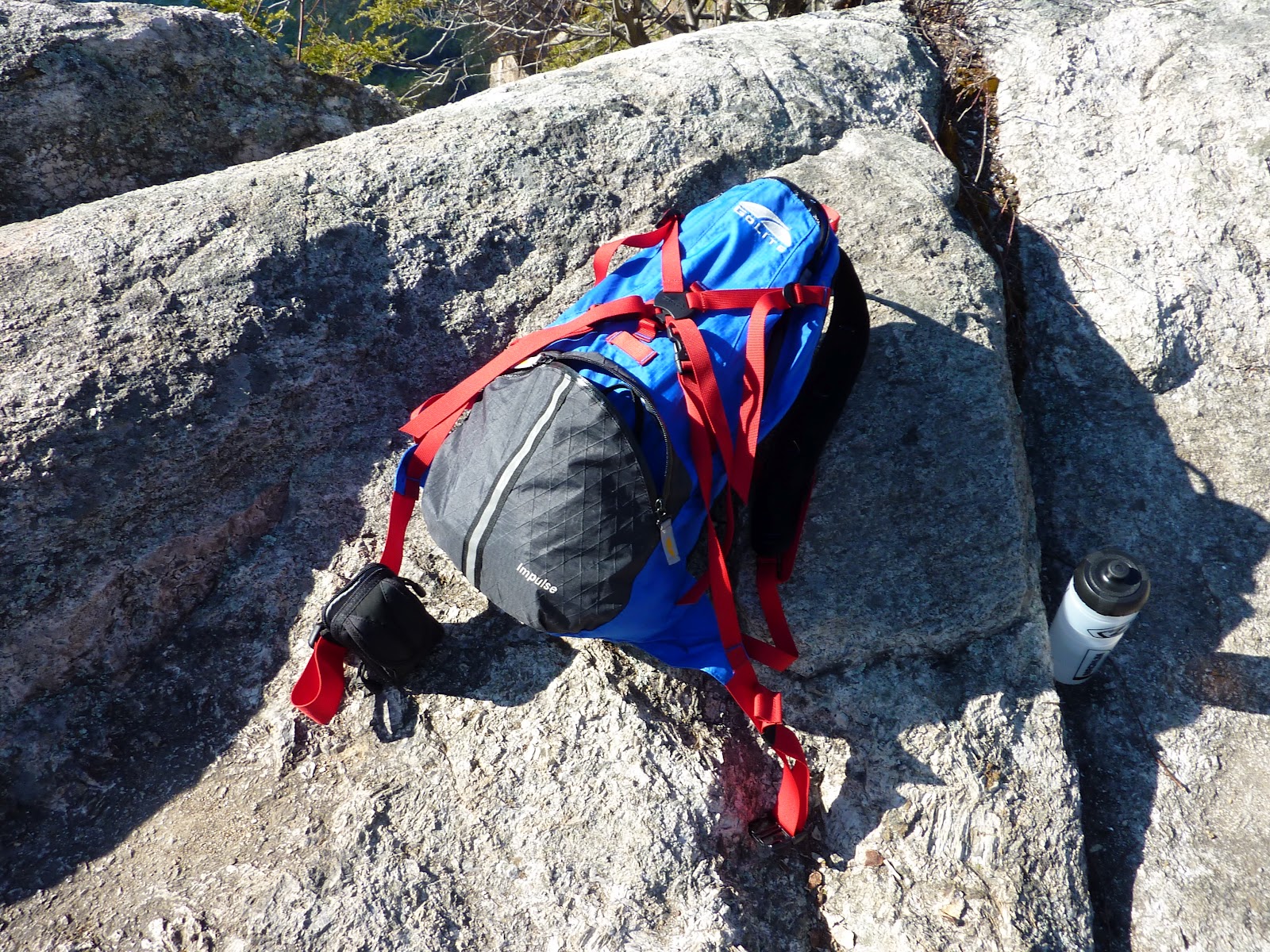
My current favorite pack is a few years old, a Golite Impulse. It can hold 3 liters or a few bottles of water with room for a bunch of food, a jacket and some other gear, but it's stable enough to keep things from bouncing when you run. In winter especially it's wise to have an extra hat and an extra top layer in the pack, and use the pack to shed other layers into.

 Pine Meadow Lake -- it does look inviting:


3/08/2012

Trail Flow: Changing Terrain

There are different levels of awareness and concentration depending on many factors when trail running (or any activity for that matter) but it mostly depends on the kind of terrain, the weather, and what the weather does to the terrain. Some of the kinds of trail terrain that come to mind are:

- Carriage road
- Dirt road
- Uncleared dirt road
- Snowmobile/ATV trail
- dirt base single-track
- dirt base single-track with rocks and roots
- technical

Of those, technical is the most vague. What I mean by a technical trail is a trail that has so many rocks, roots, or cliffs, or whatever -- that footing is a significant challenge. Choosing your line over the terrain and deciding where you'll place each foot is an important part of flowing over the trail, and that's what makes trail running such fun. Why would that make it fun is hard to explain, but trail runners either know what I'm talking about or they prefer easier trails, where accurate footing is not as important.

The last few runs I've thought about the difference between running primarily on the tops of the rocks in very technical sections, and running primarily on the dirt between the rocks. Switching between the those two distinct methods made me realize they are optimizing different things. When there are fewer rocks, you run on the trail and avoid the rocks, moving and lifting your feet out of the way of passing rocks. When there are too many rocks, you come to a point when you realize that you can run on the tops of the rocks much more efficiently, even if it temporarily expends more energy. Because small movements affect your balance easily when you're moving faster, you can easily adjust your foot placements in the most time-efficient way. So it often makes sense to speed up somewhat for technical sections, instead of slowing significantly to pick your way through or over the obstacles. If you slow, your balance becomes more heavily invested in foot placements, making it harder ironically.

Now that I'm running on pretty technical trails most of the time, I find that I now have 3 distinct trail running modes. First is the low awareness smoother trail mode, where I'm a little more aware than when running on roads and watch my footing a little. Second, there is the higher awareness rough trail mode, where I'm still trying to optimize my flow and footing for controlled speed and efficiency. After many years of running in this mode, I can instinctively catch a bad foot placement to avoid a turned ankle. Last is the focused awareness challenge mode, where I'm scouting my line ahead and placing my feet as precisely as within one inch in order to step on certain rocks or ledges without slowing down. This is the mode where you expend more energy to make progress in a more time efficient way, for example taking much longer and out-of-line strides at times to best cover the ground. If the rocks are right it can be a lot of fun, kind of like dancing on rocks.

Switching the mode of running for a new terrain context is something I never thought about until I ran these trails with extremely technical sections more frequently. Rough trail mode is so automatic for me that it took a while to just really focus on rocks and only rocks sometimes, which takes me into that next challenge mode. The stakes are much higher in challenge mode, and I've been lucky in the past. If you trip at the wrong time when you're running a little faster over very technical stuff, you can fall pretty hard: I once tripped and flew about 10 feet forward and 3 feet down chest-planted onto some rocks while running up at Giant Ledge in the Catskills. I lay there for probably 10 minutes before I was sure nothing was broken. Considering all my years of orienteering and trail running, that remains my worst fall.

When I switch from smooth-trail mode to rough-trail mode, where I flip on my reflexes for counteracting ankle-threatening foot-plants, it's like I shift into a different and more focused state of mind. It keeps parts of both the conscious and unconscious minds busy, and can become a kind of meditation, but one with action that can be entertaining at the same time. When you up the notch and flip the switch to challenge mode, it takes even more focus, and can be even more fun. I get so carried away with running on the rocks sometimes that instead of running on the trail again after it smooths out a little, I just run alongside the trail on any rocks I can find. But for racing I will have to optimize switching back and forth between those modes of focus.